How Calisthenics Became a Studio Practice
Trace how calisthenics moved from shared spaces into fitness studios, and learn how room design, schedules, and equipment shape the way bodyweight exercise is read.
Calisthenics can look like a school drill in a line, a park workout around a bar, or a scheduled class in a studio. The movements may overlap, but their setting changes how people understand the practice. The path from calisthenics to fitness studios is not a single historical handoff; it is a change in how bodyweight exercise is organized and presented.
What does the word calisthenics describe?
Calisthenics is commonly used for exercises that rely chiefly on body weight, such as squats, push-ups, lunges, and hanging movements. The term has also been associated with organized routines and physical education. Its meaning depends partly on context: a school may use it for group drills, while a studio may apply it to a class with progressions and individual options.
That range makes a tidy origin story misleading. Bodyweight movements are not the property of one institution or era, and the label does not describe a single, unchanging method. A careful account can instead distinguish the settings where organized exercise was taught from the later commercial and community spaces that gave fitness its own timetable and identity.
How did exercise move between shared spaces?
Schools, civic facilities, military settings, parks, and recreational gyms have all provided places for organized movement. Their purposes differed. A school could connect exercise with instruction; a public park made activity part of outdoor recreation; a dedicated gym set aside a room and equipment for training. These are broad kinds of setting, not a universal sequence followed everywhere.
In shared spaces, repetition and group arrangement can make a routine easy to lead. Lines direct attention toward an instructor. An open floor accommodates movements that need little equipment. A fixed bar makes hanging or supported exercises possible. The room’s layout does not dictate the meaning of an activity, but it affects what participants see and how the session is managed.
As scheduled fitness services became familiar in more communities, a dedicated room could signal that exercise was an activity in its own right, rather than one use among many. The change was not simply from outdoor movement to indoor movement: parks and school gyms did not vanish. Instead, studios added a distinct format, with a named class, a regular schedule, and a space arranged for that service.
What changed when studios took up bodyweight exercise?
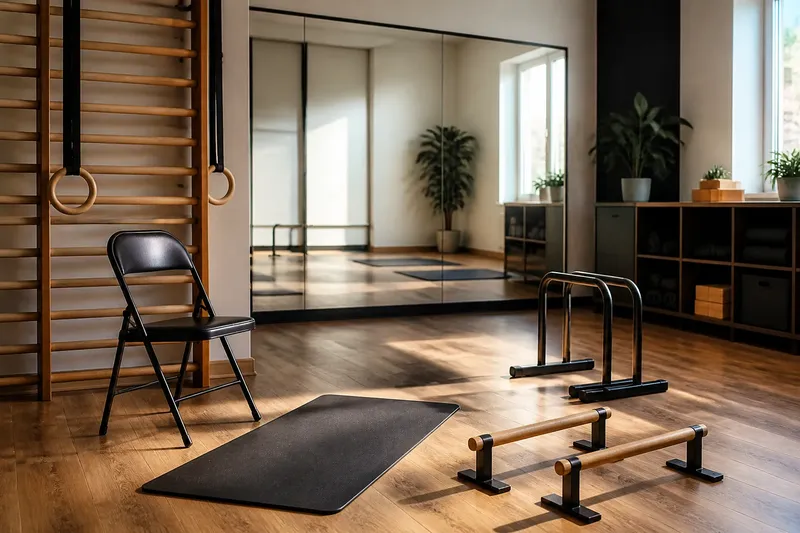
A studio gives exercise a visible frame. Mirrors may help participants follow a demonstration, mats can mark individual work areas, and a clear floor can support a sequence without machines. Even a room with little equipment can feel specialized when its schedule, lighting, signage, and arrangement all point toward training.
That framing brings both clarity and a possible barrier. A named class and predictable setup tell visitors what to expect. At the same time, a polished room or unfamiliar vocabulary may make a basic movement practice seem more exclusive or elaborate than it is. The setting can affect first impressions without changing the movement’s basic requirements.
Say a community center plans a bodyweight class in a multipurpose room with wall bars, folding chairs, and an open floor. The organizer writes “bodyweight movement using the floor, chairs, and wall bars” on the schedule, places chairs where they are easy to choose, and leaves a clear route to the bars. A visitor can then see what the session uses and ask about an option before joining; the tradeoff is that the room still feels shared rather than purpose-built.
What do people ask about calisthenics and studios?
Is calisthenics different from bodyweight training?
The terms overlap: both often refer to exercise that uses the body as resistance rather than relying on machines or free weights. Calisthenics can suggest a more organized routine or a particular training tradition, so a class description should make its actual activities clear.
Does calisthenics require a studio?
No. Bodyweight movement can take place in a park, school gym, community room, or home, depending on the activity and suitable space. A studio offers a dedicated setting and schedule, not exclusive ownership of the practice.
Why might a studio use mirrors?
Mirrors can help participants watch a demonstration or observe their position. They are a design choice, not a requirement for calisthenics, and some rooms can teach movement without them.
What equipment does a calisthenics class need?
There is no single required equipment set. Some sessions use only floor space; others use bars, benches, or chairs, depending on the movements and the room’s safe arrangement.
What should a studio preserve from calisthenics?
A studio can make bodyweight exercise feel organized without implying that it needs elaborate equipment. Clear routes, visible props, and plain descriptions help people understand how a room will be used. They also preserve a useful quality of calisthenics: movements can be adapted to available space and support, rather than being defined by a machine.
Room design should follow the intended session. If a class uses chairs, make them visible and explain their role. If a movement requires a bar, keep access to it clear and describe the activity honestly. These choices do not resolve every question of access or comfort, but they make the studio’s invitation more legible.
The move from calisthenics to fitness studios is best understood as a change in presentation, organization, and setting—not as the replacement of one form of exercise by another. When judging a studio, look beyond its finish: ask whether its layout and description show what participants will actually do.