Group Class or Solo Session: Two Different Kinds of Structure
Group class or solo session? Compare shared timing with self-paced training to choose the structure that fits your attention, energy, and exercise habits.
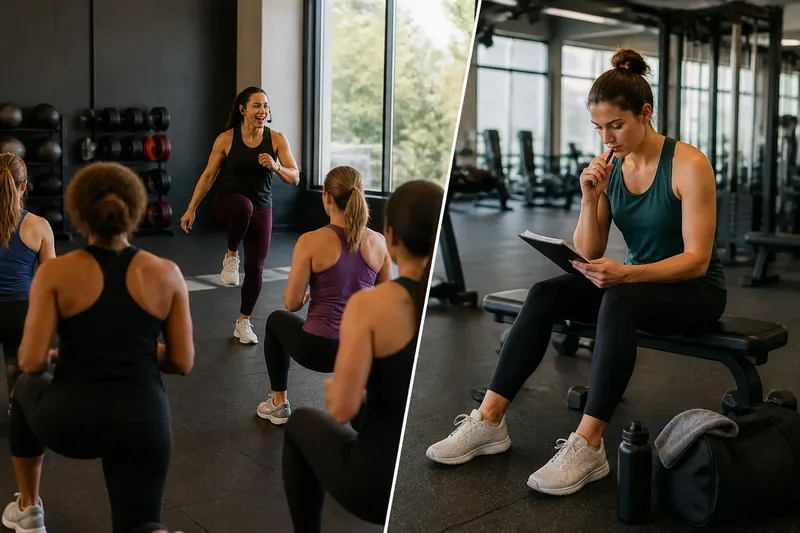
A group class or solo session changes not just who exercises beside you, but who decides what happens next. In a group class, the instructor and shared clock supply much of the structure; alone, you make more of those decisions yourself. Neither arrangement is inherently more disciplined. The useful choice is the one whose demands suit the way you prefer to begin, continue, and finish.
What does a group class decide for you?
A scheduled class creates a sequence before you arrive. The instructor cues one movement, then another, and the room changes activity together. You do not need to choose the next exercise or keep track of every transition. That can make a session feel straightforward, especially if planning a workout is the part most likely to delay it.
The structure is visible in small details: music may mark a change, the instructor may count repetitions, and other participants may move at roughly the same time. Those cues can help you stay engaged without checking a watch or writing notes between exercises. They also mean the session’s pace is partly set by someone else.
That shared pace has limits. A movement may be familiar to the group but new to you, or the next transition may arrive before you feel ready. You can ask the instructor about a suitable modification, pause when needed, or choose a different class. The format provides direction, not an obligation to match every person in the room.
Before booking, look at the class description and ask how the instructor handles different experience levels. A clear answer can tell you more about the class’s structure than its name alone.
What do you have to decide in a solo session?
A solo session gives you room to set the pace and order. You might repeat a familiar sequence, spend more time on an exercise that needs attention, or stop when your focus slips. The freedom is useful when you want to adjust the session as you go, but it comes with more small decisions.
You may need to choose an exercise, find a free space or piece of equipment, remember what comes next, and decide when to move on. A short written plan can take those choices out of the moment. It might list a few exercises in order, with a simple note such as “repeat if comfortable” or “skip if the station is busy.”
A solo session does not have to mean improvising. You can follow a familiar routine, use a timer for work and rest periods, or follow a recorded class with headphones. Each option adds a different kind of external cue. A timer keeps time, while a recorded instructor supplies a sequence; neither offers the same real-time adjustment as an instructor in the room.
Keep the plan easy to consult. If you need to scroll through a long note while moving between crowded equipment, the plan may add friction instead of reducing it.
Which kind of structure supports your attention?
Think about where your attention tends to go during exercise. Some people find it easier to keep moving when a voice gives the next cue. Others prefer quiet, a familiar playlist, or the chance to concentrate on one movement without following a group’s pace.
Imagine you arrive at the gym with a short window and no clear idea what to do. In a class, the scheduled start and instructor-led sequence could remove the need to make a plan on the spot. In a solo session, a note saved on your phone could provide the same initial direction while leaving you free to pause or reorder exercises. The observable difference is who supplies the next cue: the instructor or your own plan.
Consider how you respond when you miss a cue or lose your place. In a class, the group may already be on the next movement. In a solo session, you can reread your note or return to the previous exercise. Neither response is a character test; it is useful information about which format feels easier to rejoin.
If you are unsure, choose a low-pressure session and notice how much attention goes to the workout itself versus keeping up with its structure.
How should you compare pace, feedback, and flexibility?
These formats differ in three practical ways. A class usually offers a shared pace, live cues, and a sequence that is already chosen. A solo session usually offers more control over tempo and order, but less immediate guidance. The actual balance depends on the class, the instructor, the room, and how much of your solo plan you bring with you.
- Pace: In a class, the instructor sets transitions for the group. Alone, you decide when to continue, pause, or change an exercise.
- Feedback: An instructor may offer cues or answer a question in the moment. During solo training, feedback may come from your own attention, a written prompt, or a remote program.
- Flexibility: A solo plan is easier to rearrange when a machine is occupied or your energy changes. A class may allow modifications, but its overall sequence remains shared.
- Social setting: A class puts you among people moving together, without requiring conversation. Solo training offers more privacy, even in a busy fitness space.
For unfamiliar movements, live instruction can be helpful, but it does not replace asking questions or using an appropriate modification. For established routines, solo training can make it easier to adjust rest and order. If pain, an injury, or a health concern affects what you can do, seek advice from a qualified professional rather than relying on a format choice to answer it.
What should you ask before choosing a format?
Will a group class adjust exercises for beginners?
Ask whether the instructor demonstrates options and whether participants can pause or change a movement. A clear explanation helps you judge if the class has room for different comfort levels.
Can I leave a class or take a break?
Ask how breaks work and whether leaving early disrupts the session. Knowing the room’s expectations can make it easier to participate without feeling obliged to follow every transition.
What belongs in a solo workout plan?
Include an exercise order, a simple cue for when to move on, and an alternative if a space or piece of equipment is unavailable. Keep the plan short enough to check without losing your place in the session.
Can I combine a class with solo training?
Yes. You might attend a class when you want live cues and use solo sessions for a familiar routine or a more flexible pace. Treat the formats as different tools rather than competing identities.
How can you make a choice without overcommitting?
Start with the session that answers your main question. If you want someone else to choose the sequence, try a class whose description explains its format and intended experience level. If you want to control timing and exercise order, bring a concise plan to a solo session.
Afterward, make a brief note: Did the structure help you stay engaged? Were transitions comfortable? Did you spend more attention on movement or on figuring out what came next? These observations are more useful than judging a session by whether it felt easy or difficult.
You can also alternate. A class can supply a ready-made sequence on days when planning feels burdensome; a solo session can provide room to move at your own pace on other days. Group class or solo session is not a permanent choice. It is a decision about which kind of structure will help you take part today.
For the next visit, decide in advance who you want to handle the next cue: an instructor, a timer, or you. That small choice can make the rest of the session feel clearer.